Member identification
Alliance participants can use defined token holdings as part of member-tier and eligibility checks, subject to published rules.
BSGAI is designed as a digital participation and merchant-accountability mechanism for the four global alliances—connecting eligibility, platform use, transaction records and agreed warranty pledges.
A practical utility model for participation and commerce—not simply a coin displayed on an exchange.
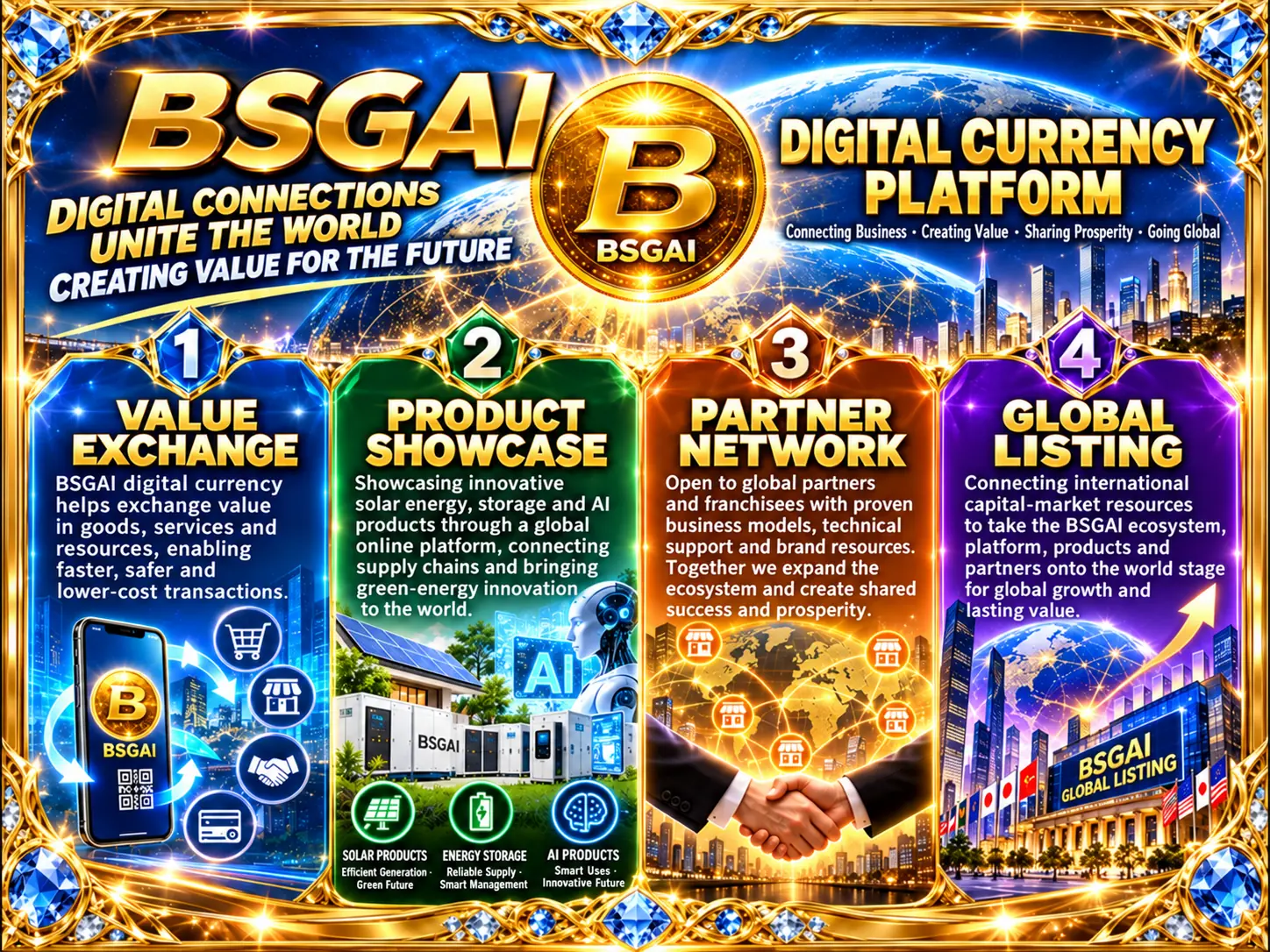
Alliance participants can use defined token holdings as part of member-tier and eligibility checks, subject to published rules.
Approved merchants may pledge a specified token quantity in connection with product or service quality obligations.
A common framework links founders, franchisees, merchants and customers across four independently governed alliances.
The BSGAI utility layer is intended to support different business sectors with common participation and accountability concepts.
Business products, trade connections, exhibitions and global distribution partnerships.
Commerce & TradeHealth-sector collaboration, wellness services and responsible product promotion.
Health & WellnessProperty marketing, service collaboration and cross-border business introductions.
Real EstateArtist showcases, cultural exchanges, creative commerce and art-related partnerships.
Arts & CultureA transparent sequence helps distinguish membership, merchant approval and commercial pledges.
Apply to an alliance and complete required member, business and identity checks.
Follow the applicable membership tier and token-holding rules; a proposed one-star threshold is 100 BSGAI.
For commercial listings, agree on the separately specified defect-warranty pledge, custody and release terms.
Publish approved goods or services with clear descriptions, buyer terms and transaction records.
Handle a defect claim under agreed evidence, notice, dispute and cap rules; release any remaining pledge when eligible.
Membership requirements and business privileges should be checked against the specific alliance documents.
These two mechanisms serve different purposes and must be assessed separately.
The project describes a target of allocating over 80% of designated reserves to liquidity support. This may help market depth, but does not guarantee token price, redemption or absence of losses.
A merchant pledge is a capped contractual arrangement. Eligibility, claim evidence, compensation, custody and release depend on binding terms—not an automatic or unlimited insurer promise.
The stated BSGAI plan divides planned releases into 20 groups of 10 stages: 200 stages in total. Release conditions and prices remain subject to official publication and market demand; no price appreciation is assured.
Check official disclosuresIllustrative structure only · not a price forecast
Start with the key differences between utility, membership and consumer protection.
No. Holding a utility token does not itself grant company shares, voting rights, dividends or ownership in any alliance. Equity participation requires separate legal documents.
No. Membership recognition and product-quality pledges are distinct requirements. Exact quantities, lockups and claim terms must be stated in the relevant published agreement.
No. Liquidity planning cannot eliminate volatility, market manipulation, counterparty or technical risks. There is no guaranteed price floor or return.
The merchant agreement should specify deadlines, evidence, a review and appeal process, and any compensation cap. A token pledge alone does not create automatic compensation.
No. This independent guide does not accept funds, connect wallets or collect identity documents. Use verified official channels and read current terms before taking action.
Discover the wider BSGAI ecosystem, its renewable energy infrastructure, AI systems and global alliance initiatives.